YE4/IE4 Super Premium Efficiency Three Phase AC Gear Motor
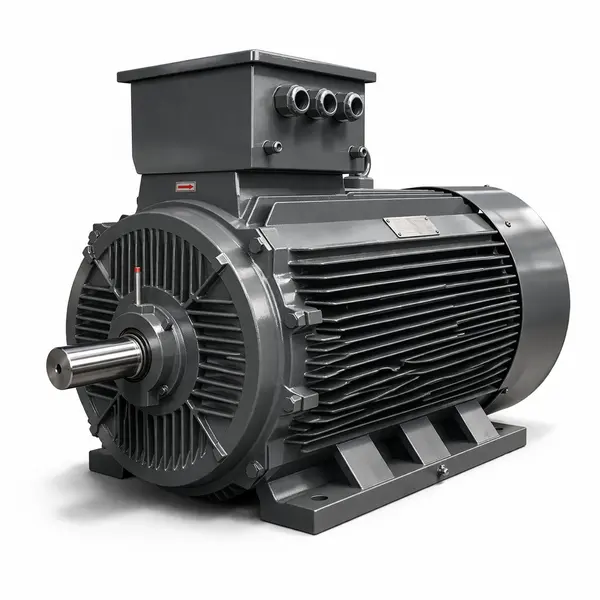
The YE4 (IE4 Super Premium Efficiency) three phase AC gear motor achieves the highest efficiency available in squirrel-cage induction motor technology — 1 to 3 percentage points above IE3 at every load point. Covering 0.75 to 315 kW in 2-pole and 4-pole configurations, it starts direct-on-line without a mandatory VFD, making it the most cost-effective path to maximum motor efficiency. Built with 0.35 mm grain-oriented silicon steel, high copper-fill windings, and C3-clearance low-friction bearings in a cast-iron IEC-standard frame. Typical ROI payback: 12 to 24 months on motors running 4000+ hours per year.
⚡ Product Overview: The Efficiency Ceiling
Every generation of IEC efficiency standards pushes induction motors closer to their theoretical performance limit. The YE4 series sits at that frontier. Classified under IEC 60034-30-1 as IE4 (Super Premium Efficiency), this motor extracts gains from every available engineering lever — thinner laminations, purer silicon steel, heavier copper windings, tighter air-gap tolerances, and aerodynamically profiled cooling fans — to deliver rated-load efficiency figures that were, until a few years ago, the exclusive territory of permanent-magnet synchronous machines.
The critical distinction between the YE4 and a permanent-magnet (PM) motor is operational simplicity. A PM motor mandates a variable frequency drive for every start — it cannot run direct-on-line. The YE4 starts on a standard contactor, runs on a standard thermal overload relay, and integrates into existing motor control centers without any panel redesign. When you do pair it with a VFD for variable-speed applications, it performs as well as any inverter-duty motor with the added benefit of IE4 efficiency at the base-frequency operating point. The power range spans 0.75 kW to 315 kW across 2-pole and 4-pole configurations, all built on IEC 60072 frame dimensions for bolt-in replacement of any existing IEC-standard motor.
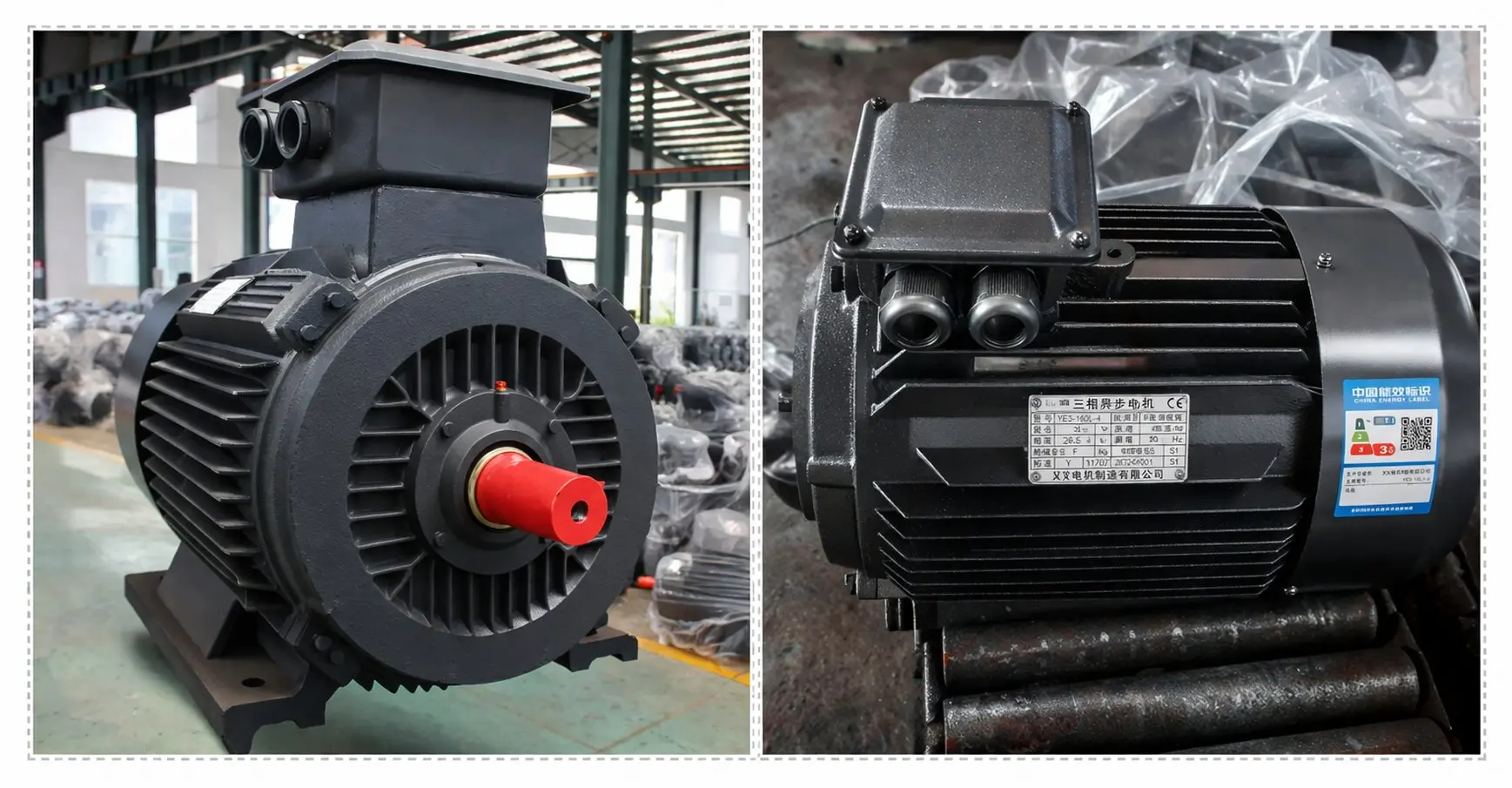
For Korean manufacturers evaluating motor upgrades under the tightening requirements of the K-ETS (Korea Emissions Trading Scheme) and the Energy Efficiency Resource Standard, the YE4 represents the most straightforward hardware change that delivers verifiable, auditable energy savings without process disruption. A typical 45 kW pump motor upgraded from IE2 to IE4 saves approximately 9 000 kWh per year at 7 000 operating hours — enough to pay back the entire price premium within 14 months at current industrial electricity rates. Facilities running hundreds of motors can multiply that figure and present a capital expenditure case that any CFO will approve. The motor itself connects to the same planetary gearbox or direct-drive coupling as its predecessor, and the output shaft, foot bolt pattern, and terminal box position remain unchanged.
📊 Technical Specifications
The performance table below covers 2-pole and 4-pole models with efficiency measured at three load points (100 %, 75 %, 50 %) and rated current listed at three common supply voltages (380 V, 400 V, 415 V). The 75 % and 50 % load efficiency columns are particularly important for variable-load applications — pumps, fans, and compressors rarely operate at exactly 100 % of nameplate rating, so the part-load numbers give a more realistic picture of actual energy consumption. Scroll horizontally on mobile devices to see all 16 columns.
| IE4/YE4 Series Super Premium Efficiency Three Phase Asynchronous Motor | |||||||||||||||
|---|---|---|---|---|---|---|---|---|---|---|---|---|---|---|---|
| Type | Rated Power | Rated Speed | Efficiency (IE4) | Power Factor | Rated current (A) | Rated Torque | Ist/In | Tst/Tn | Tmax/Tn | Weight | |||||
| (kW) | (HP) | (r/min) | 100% | 75% | 50% | (cosφ) | 380V | 400V | 415V | (N.m) | (times) | (times) | (times) | (kg) | |
| Synchronous Speed 3000 r/min = 2 poles (50Hz) | |||||||||||||||
| IE4/YE4-631-2 | 0.18KW | 0.25HP | 2745 | 70.8 | 70.8 | 69.4 | 0.8 | 0.48 | 0.46 | 0.44 | 0.63 | 2.2 | 2.2 | 5.5 | 11.3 |
| IE4/YE4-632-2 | 0.25KW | 0.37HP | 2745 | 74.3 | 74.3 | 72.8 | 0.81 | 0.63 | 0.60 | 0.58 | 0.87 | 2.2 | 2.2 | 5.5 | 11.8 |
| IE4/YE4-711-2 | 0.37KW | 0.5HP | 2765 | 78.1 | 78.1 | 76.5 | 0.81 | 0.89 | 0.84 | 0.81 | 1.28 | 2.2 | 2.2 | 6.1 | 13.2 |
| IE4/YE4-712-2 | 0.55KW | 0.75HP | 2765 | 81.5 | 81.5 | 79.9 | 0.82 | 1.25 | 1.19 | 1.14 | 1.9 | 2.3 | 2.3 | 6.1 | 14.5 |
| IE4/YE4-801-2 | 0.75KW | 1HP | 2920 | 83.5 | 83.5 | 81.8 | 0.82 | 1.66 | 1.58 | 1.52 | 2.46 | 2.3 | 2.3 | 7 | 20 |
| IE4/YE4-802-2 | 1.1KW | 1.5HP | 2925 | 85.2 | 85.2 | 83.5 | 0.83 | 2.36 | 2.25 | 2.16 | 3.6 | 2.2 | 2.3 | 7.3 | 21 |
| IE4/YE4-90S-2 | 1.5KW | 2HP | 2925 | 86.5 | 86.5 | 84.8 | 0.84 | 3.14 | 2.98 | 2.87 | 4.89 | 2.2 | 2.3 | 7.6 | 24 |
| IE4/YE4-90L-2 | 2.2KW | 3HP | 2930 | 88 | 88 | 86.2 | 0.85 | 4.47 | 4.25 | 4.09 | 7.17 | 2.2 | 2.3 | 7.6 | 29 |
| IE4/YE4-100L-2 | 3KW | 4HP | 2935 | 89.1 | 89.1 | 87.3 | 0.87 | 5.88 | 5.59 | 5.38 | 9.76 | 2.2 | 2.3 | 7.8 | 37 |
| IE4/YE4-112M-2 | 4KW | 5.5HP | 2940 | 90 | 90 | 88.2 | 0.88 | 7.67 | 7.29 | 7.03 | 13 | 2.2 | 2.3 | 8.3 | 48 |
| IE4/YE4-132S1-2 | 5.5KW | 7.5HP | 2945 | 90.9 | 90.9 | 89.1 | 0.88 | 10.4 | 9.9 | 9.57 | 17.8 | 2 | 2.3 | 8.3 | 76 |
| IE4/YE4-132S2-2 | 7.5KW | 10HP | 2950 | 91.7 | 91.7 | 89.9 | 0.88 | 14.1 | 13.4 | 12.9 | 24.3 | 2 | 2.3 | 7.9 | 85 |
| IE4/YE4-160M1-2 | 11KW | 15HP | 2960 | 92.6 | 92.6 | 90.7 | 0.89 | 20.3 | 19.3 | 18.6 | 35.5 | 2 | 2.3 | 8.1 | 133 |
| IE4/YE4-160M2-2 | 15KW | 20HP | 2960 | 93.3 | 93.3 | 91.4 | 0.89 | 27.4 | 26.1 | 25.1 | 48.4 | 2 | 2.3 | 8.1 | 146 |
| IE4/YE4-160L-2 | 18.5KW | 25HP | 2960 | 93.7 | 93.7 | 91.8 | 0.89 | 33.7 | 32.0 | 30.9 | 59.7 | 2 | 2.3 | 8.2 | 160 |
| IE4/YE4-180M-2 | 22KW | 30HP | 2965 | 94 | 94 | 92.1 | 0.89 | 40.0 | 38.0 | 36.6 | 70.9 | 2 | 2.3 | 8.2 | 221 |
| IE4/YE4-200L1-2 | 30KW | 40HP | 2970 | 94.5 | 94.5 | 92.6 | 0.89 | 54.2 | 51.5 | 49.6 | 96.5 | 2 | 2.3 | 7.6 | 260 |
| IE4/YE4-200L2-2 | 37KW | 50HP | 2970 | 94.8 | 94.8 | 92.9 | 0.89 | 66.6 | 63.3 | 61.0 | 119 | 2 | 2.3 | 7.6 | 309 |
| IE4/YE4-225M-2 | 45KW | 60HP | 2975 | 95 | 95 | 93.1 | 0.9 | 80.0 | 76.0 | 73.2 | 144.5 | 2 | 2.3 | 7.7 | 370 |
| IE4/YE4-250M-2 | 55KW | 75HP | 2975 | 95.3 | 95.3 | 93.4 | 0.9 | 97.4 | 92.6 | 89.2 | 176.6 | 2 | 2.3 | 7.7 | 520 |
| IE4/YE4-280S-2 | 75KW | 100HP | 2980 | 95.6 | 95.6 | 93.7 | 0.9 | 132 | 126 | 121 | 240.4 | 1.8 | 2.3 | 7.1 | 570 |
| IE4/YE4-280M-2 | 90KW | 125HP | 2982 | 95.8 | 95.8 | 93.9 | 0.9 | 159 | 151 | 145 | 288.2 | 1.8 | 2.3 | 7.1 | 630 |
| IE4/YE4-315S-2 | 110KW | 150HP | 2980 | 96 | 96 | 94.1 | 0.9 | 193 | 184 | 177 | 352.5 | 1.8 | 2.3 | 7.1 | 985 |
| IE4/YE4-315M-2 | 132KW | 180HP | 2980 | 96.2 | 96.2 | 94.3 | 0.9 | 232 | 220 | 212 | 423 | 1.8 | 2.3 | 7.1 | 1050 |
| IE4/YE4-315L1-2 | 160KW | 200HP | 2980 | 96.3 | 96.3 | 94.4 | 0.91 | 277 | 264 | 254 | 512.8 | 1.8 | 2.3 | 7.2 | 1160 |
| IE4/YE4-315L2-2 | 200KW | 270HP | 2980 | 96.5 | 96.5 | 94.6 | 0.91 | 346 | 329 | 317 | 640.9 | 1.8 | 2.2 | 7.2 | 1200 |
| IE4/YE4-355M-2 | 250KW | 340HP | 2985 | 96.5 | 96.5 | 94.6 | 0.91 | 433 | 411 | 396 | 799.8 | 1.6 | 2.2 | 7.2 | 2050 |
| IE4/YE4-355L-2 | 315KW | 430HP | 2982 | 96.5 | 96.5 | 94.6 | 0.91 | 545 | 518 | 499 | 1009 | 1.6 | 2.2 | 7.2 | 2380 |
| Synchronous Speed 1500 r/min = 4 poles (50Hz) | |||||||||||||||
| IE4/YE4-631-4 | 0.12KW | 0.18HP | 1340 | 69.8 | 69.8 | 68.4 | 0.72 | 0.36 | 0.34 | 0.33 | 0.86 | 2.1 | 2.2 | 4.4 | 11.8 |
| IE4/YE4-632-4 | 0.18KW | 0.25HP | 1340 | 74.7 | 74.7 | 73.2 | 0.73 | 0.50 | 0.48 | 0.46 | 1.28 | 2.1 | 2.2 | 4.4 | 12.6 |
| IE4/YE4-711-4 | 0.25KW | 0.37HP | 1355 | 77.9 | 77.9 | 76.3 | 0.74 | 0.66 | 0.63 | 0.60 | 1.76 | 2.1 | 2.2 | 5.2 | 18 |
| IE4/YE4-712-4 | 0.37KW | 0.5HP | 1355 | 81.1 | 81.1 | 79.5 | 0.75 | 0.92 | 0.88 | 0.85 | 2.61 | 2.1 | 2.2 | 5.2 | 19.5 |
| IE4/YE4-801-4 | 0.55KW | 0.75HP | 1420 | 83.9 | 83.9 | 82.2 | 0.75 | 1.33 | 1.26 | 1.22 | 3.7 | 2.4 | 2.3 | 5.2 | 21 |
| IE4/YE4-802-4 | 0.75KW | 1HP | 1430 | 85.7 | 85.7 | 84 | 0.75 | 1.77 | 1.68 | 1.62 | 5.01 | 2.3 | 2.3 | 6.6 | 24 |
| IE4/YE4-90S-4 | 1.1KW | 1.5HP | 1445 | 87.2 | 87.2 | 85.5 | 0.76 | 2.52 | 2.40 | 2.31 | 7.27 | 2.3 | 2.3 | 6.8 | 30 |
| IE4/YE4-90L-4 | 1.5KW | 2HP | 1450 | 88.2 | 88.2 | 86.4 | 0.77 | 3.36 | 3.19 | 3.07 | 9.88 | 2.3 | 2.3 | 7 | 34 |
| IE4/YE4-100L1-4 | 2.2KW | 3HP | 1455 | 89.5 | 89.5 | 87.7 | 0.81 | 4.61 | 4.38 | 4.22 | 14.4 | 2.3 | 2.3 | 7.6 | 47 |
| IE4/YE4-100L2-4 | 3KW | 4HP | 1455 | 90.4 | 90.4 | 88.6 | 0.82 | 6.15 | 5.84 | 5.63 | 19.7 | 2.3 | 2.3 | 7.6 | 53 |
| IE4/YE4-112M-4 | 4KW | 5.5HP | 1460 | 91.1 | 91.1 | 89.3 | 0.82 | 8.1 | 7.7 | 7.45 | 26.2 | 2.2 | 2.3 | 7.8 | 60 |
| IE4/YE4-132S-4 | 5.5KW | 7.5HP | 1470 | 91.9 | 91.9 | 90.1 | 0.83 | 11.0 | 10.4 | 10.0 | 35.7 | 2 | 2.3 | 7.9 | 85 |
| IE4/YE4-132M-4 | 7.5KW | 10HP | 1470 | 92.6 | 92.6 | 90.7 | 0.84 | 14.7 | 13.9 | 13.4 | 48.7 | 2 | 2.3 | 7.5 | 96 |
| IE4/YE4-160M-4 | 11KW | 15HP | 1475 | 93.3 | 93.3 | 91.4 | 0.85 | 21.1 | 20.0 | 19.3 | 71.2 | 2.2 | 2.3 | 7.7 | 146 |
The 4-pole section is partially truncated due to source data limits. Complete 4-pole, 6-pole, and 8-pole datasheets are available from our engineering team at [email protected].
💰 Return on Investment: The Payback Math
Motor efficiency improvements pay for themselves through reduced electricity consumption — but the speed of that payback depends on three variables: the efficiency gap between the old and new motor, the motor's annual operating hours, and the local electricity tariff. Korean industrial electricity prices in 2025 range from approximately 100 to 130 KRW per kWh depending on the time-of-use tier and contract type. The table below calculates annual kWh savings and approximate monetary payback for three representative motor sizes, each running 6 500 hours per year (roughly two-shift plus weekend operation).
| Scenario | Motor Rating | Old Motor Efficiency |
YE4 Efficiency |
Annual kWh Saved |
Annual Saving (KRW) |
Approx. Payback |
|---|---|---|---|---|---|---|
| IE2 → IE4 | 7.5 kW | 87.0 % | 90.1 % | ~1 680 | 190 000 | 18 months |
| IE1 → IE4 | 22 kW | 87.5 % | 92.7 % | ~7 500 | 860 000 | 10 months |
| IE2 → IE4 | 75 kW | 93.0 % | 94.7 % | ~6 800 | 780 000 | 14 months |
| IE3 → IE4 | 45 kW | 93.0 % | 94.0 % | ~3 100 | 355 000 | 22 months |
The formula behind these figures is straightforward: Annual Savings (kWh) = Rated Power (kW) × Operating Hours × (1/Old Efficiency − 1/New Efficiency). Plug in your own numbers and the calculation takes 30 seconds on a phone calculator. For a plant running 30 motors of 22 kW each, replacing the entire fleet from IE1 to IE4 saves roughly 225 000 kWh per year — over 25 million KRW annually. After the payback window closes at around month 10, those savings continue for the remaining 12 to 18 years of motor service life. The cumulative avoided cost over a 15-year horizon exceeds 375 million KRW on that single fleet, before accounting for any carbon-credit revenue or regulatory penalty avoidance. Our full AC gear motor catalog includes IE2, IE3, and IE4 options so you can select the efficiency tier that matches your budget cycle.
⚖ IE4 Induction vs IE3 Induction vs Permanent-Magnet Motor
Procurement engineers evaluating high-efficiency motors often face a three-way decision: stay at IE3, step up to IE4, or jump to a permanent-magnet synchronous motor (PMSM) that claims IE5-level performance. Each option involves different capital cost, installation complexity, and operational constraints. The comparison below strips away marketing language and focuses on the engineering and financial trade-offs.
| Criterion | IE3 Induction (YE3) |
IE4 Induction (YE4) |
PM Synchronous (IE5 class) |
|---|---|---|---|
| Efficiency at rated load (22 kW 4P) | 92.7 % | 93.7 % | 94.5–95.0 % |
| Direct-on-line starting | Yes | Yes | No — VFD mandatory |
| VFD requirement | Optional | Optional | Mandatory (adds cost) |
| Rare-earth magnet dependency | None | None | Neodymium required |
| Unit price index (22 kW) | 1.0× | 1.2–1.4× | 2.5–3.5× (motor + VFD) |
| Maintenance complexity | Standard | Standard | VFD + encoder servicing |
| Supply chain risk | Low | Low | Rare-earth price volatility |
| Retrofit complexity | Bolt-in swap | Bolt-in swap | New VFD panel + encoder wiring |
The bottom line: the YE4 occupies a unique position. It closes roughly two-thirds of the efficiency gap between IE3 and PM technology, but at only 20 to 40 % of the incremental cost — and without adding any new maintenance burden, control-system complexity, or rare-earth supply risk. For fixed-speed applications (DOL starting, constant-load pumps and fans), the YE4 is the objectively correct choice because no VFD is needed and the motor pays for itself through electricity savings alone. For variable-speed applications, the YE4 paired with a general-purpose VFD still beats a PM system on total installed cost in most scenarios below 100 kW. The crossover point — where PM economics start to win — is typically above 100 kW on drives running more than 7 000 hours per year at highly variable loads. Below that threshold, IE4 induction is the smarter investment.
🌎 Carbon Compliance: Korea's Regulatory Landscape
Korea operates one of the world's most active carbon markets. The K-ETS (Korea Emissions Trading Scheme), launched in 2015 and now in its third commitment period (2021–2025), covers approximately 700 entities responsible for 73 % of national greenhouse gas emissions. Industrial electricity consumption is a major emission source under K-ETS accounting rules: every kWh saved reduces the reporting entity's Scope 2 emissions and frees up emission allowances that can be banked or traded. In the third commitment period, the Korean Allowance Unit (KAU) has traded between 8 000 and 25 000 KRW per ton of CO₂-equivalent, with analysts expecting sustained upward pressure as the cap tightens into the fourth period.
For a manufacturing plant subject to K-ETS, motor efficiency upgrades are one of the lowest-risk, most auditable abatement measures available. Replacing 20 motors of 22 kW from IE1 to IE4 reduces annual electricity consumption by approximately 150 000 kWh. At Korea's grid emission factor of roughly 0.42 kg CO₂/kWh (2024 national average), that translates to about 63 tons of CO₂ per year in avoided emissions. At a KAU price of 15 000 KRW/ton, the carbon-credit value adds another 945 000 KRW per year on top of the direct electricity savings — accelerating the payback period by several months.
Beyond K-ETS, the Korean Energy Agency (KEA) runs the Energy Efficiency Resource Standard (EERS) program, which sets mandatory energy-saving targets for electricity and gas utilities. Motor upgrades documented with factory test reports qualify as verified savings measures under EERS. Our YE4 motors ship with individual test reports showing measured efficiency at 100 %, 75 %, and 50 % load — the exact documentation format that energy auditors and K-ETS verification bodies require. The measured values can be compared directly against the baseline motor nameplate to calculate verified savings without any additional measurement and verification (M&V) infrastructure. A well-structured speed reduction system combining the YE4 with a worm gear reducer or inline gearbox further compounds the system-level savings by eliminating mechanical throttling losses.
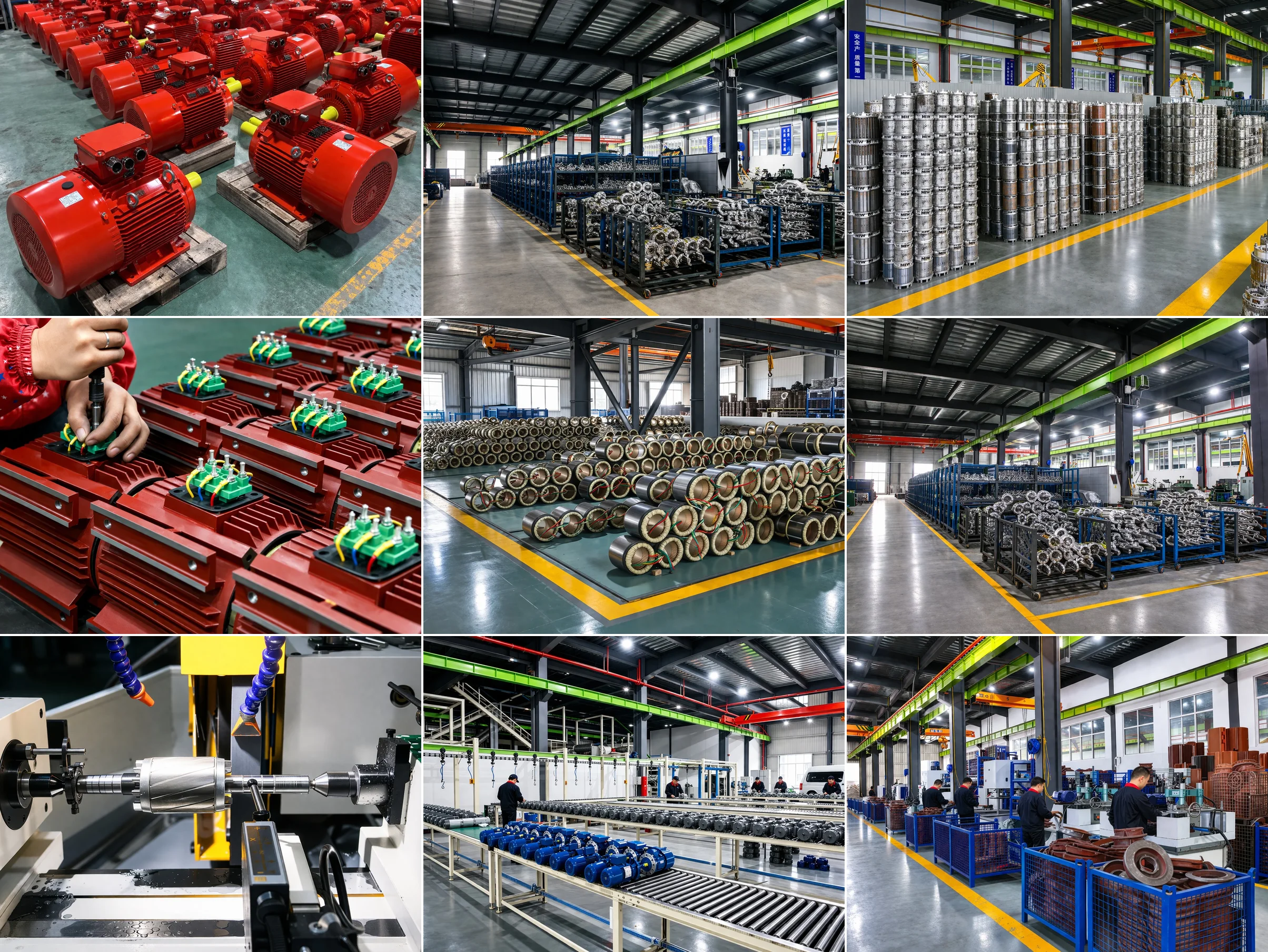
🔬 What Makes the YE4 Different Inside: Materials and Manufacturing
Achieving IE4 efficiency from a squirrel-cage induction motor — a topology that has existed for over a century — is not a matter of a single breakthrough. It is an accumulation of marginal gains across every component in the motor. Each gain costs more to implement, which is why IE4 motors carry a price premium over IE3. Understanding where that premium goes helps buyers evaluate whether the investment is justified for their specific operating profile.
Stator laminations: The YE4 uses 0.35 mm cold-rolled grain-oriented silicon steel (typically grade 35W300 or equivalent) instead of the 0.5 mm non-oriented steel used in IE2/IE3 designs. Thinner laminations reduce eddy-current losses in the iron core by approximately 25 %. The trade-off is higher material cost (grain-oriented steel costs 30–50 % more per kilogram) and more stamping operations per stator stack height (roughly 40 % more laminations for the same core length).
Copper fill factor: The winding uses a higher copper-to-slot ratio. Where an IE3 motor might achieve a fill factor of 0.38, the YE4 pushes this to 0.44 or higher through tighter conductor packing and optimized slot geometry. More copper means lower I²R resistive losses in the winding. The improvement in resistive loss accounts for roughly half of the total efficiency gain from IE3 to IE4. The consequence is a slightly heavier motor and a marginally longer stator — which is why a few YE4 models at the boundary of a frame-size step use one frame size larger than their IE3 counterpart.
Rotor bar geometry: The die-cast aluminum rotor uses a modified bar shape — deeper slots with a narrower top opening — that reduces stray-load losses without significantly affecting starting torque. The rotor laminations are stamped from the same 0.35 mm grain-oriented steel as the stator, further reducing rotor iron losses. Each rotor assembly is dynamically balanced to ISO 21940-11 Grade G1.0 (tighter than the G2.5 standard used on IE3), resulting in lower vibration and correspondingly lower friction losses in the bearings.
Air-gap control: The air gap between rotor and stator on the YE4 is held within a tolerance band of ±0.015 mm, compared to ±0.03 mm on a typical IE3 motor. A more uniform air gap reduces magnetizing current and cuts magnetic noise. Achieving this tolerance requires CNC-boring the stator housing after the lamination stack is pressed in, rather than before — an extra machining operation that adds production time and cost but pays dividends in measured efficiency.
Bearing and seal friction: Low-friction C3-clearance deep-groove ball bearings with a non-contact labyrinth seal replace the rubber lip seals used on some IE3 platforms. The labyrinth design creates a tortuous path that blocks dust and moisture while generating almost zero friction drag on the shaft. Over thousands of operating hours, the cumulative effect of lower seal friction contributes a measurable fraction of a percent to overall motor efficiency. When the drive train includes a sprocket and chain transmission or belt drive, minimizing friction at every point in the system — starting at the motor bearings — maximizes the power delivered to the final load.
🏭 Where IE4 Delivers the Fastest Payback
Not every motor in a plant warrants an IE4 upgrade. The decision depends on operating hours, load factor, and the efficiency of the motor currently in service. The scenarios below rank deployment priorities from fastest payback to longest, helping energy managers allocate capital where it generates the greatest return.
Priority 1: Continuous-Duty Pump and Fan Drives (6 000+ h/yr)
These are the highest-return targets. Municipal water pumping stations, wastewater treatment aeration blowers, and industrial cooling-water loops operate around the clock. A 75 kW cooling-water pump running 7 200 hours per year saves approximately 6 800 kWh annually when upgraded from IE2 to IE4 — generating a payback period of about 14 months. In a plant with 10 such pumps, the aggregate saving exceeds 68 000 kWh per year. At 120 KRW/kWh, that is 8.2 million KRW in annual savings from a single motor class, plus the associated K-ETS emission-reduction benefit.
Priority 2: HVAC Air Handling and Chiller Compressor Motors
Commercial buildings and data centers allocate 30 to 50 % of their total electricity consumption to HVAC. Upgrading the AHU supply-fan motor and chiller compressor motor from IE2 to IE4 reduces the HVAC electricity load by 2 to 4 %, depending on the proportion of motor power in the system. For a 30-story office tower in Seoul running twelve 22 kW AHU motors, the combined saving is approximately 40 000 kWh per year. Green-building certification programs including G-SEED (Korean Green Standard for Energy and Environmental Design), LEED, and BREEAM all grant credit for high-efficiency motor specifications — the YE4's IE4 rating satisfies the maximum available credit tier in all three systems.
Priority 3: Heavy Industry Process Drives (4 000+ h/yr)
Paper mills, cement plants, and steel rolling mills run large motors on crushers, kilns, and rolling stands. The motors are big (75 kW and above), the operating hours are high (often 8 000+ h/yr), and the existing installed base frequently consists of 15- to 20-year-old IE1 motors. The efficiency gap between IE1 and IE4 on a 132 kW motor exceeds 3 percentage points — yielding savings above 30 000 kWh per year per motor. A planned turnaround shutdown is the ideal time to execute the swap; our logistics team can stage motors at the plant gate in advance and sequence deliveries to match the shutdown schedule.
🔗 Related and Complementary Products
The YE4 motor is one component in a mechanical drive system. Depending on the application, speed reduction between the motor output shaft and the driven equipment may be required — and the choice of reducer directly affects system-level efficiency. A high-quality planetary gearbox paired with an IE4 motor preserves more of the motor's efficiency advantage than a less efficient transmission type, because planetary gear stages typically achieve 97 to 98 % mechanical efficiency per stage. For right-angle output configurations where space is limited, a worm gear reducer provides compact, self-locking speed reduction — though its lower mechanical efficiency (75 to 90 % depending on ratio) should be factored into the overall system energy calculation.

Conveyor-driven applications that require shaft offset between the motor and the driven roller commonly use sprocket and chain transmission. Industrial roller chain in ANSI #40 through #80 sizes, stainless-steel chain for food and pharmaceutical environments, and matched sprocket sets are all available from our supply chain. For direct-coupled installations, we supply flexible jaw couplings, disc couplings, and gear couplings matched to the YE4 shaft diameter and torque rating.
Same-Series Alternatives
If the YE4 exceeds your current budget or your application runs fewer than 3 000 hours per year, the YE3 (IE3 Premium Efficiency) series from the same product family offers a lower-cost entry point with 1 to 2 percentage points less efficiency. For hazardous-area installations, the YBX4 (IE4 Explosion Proof) provides the same IE4 efficiency level with Ex d IIB T4 flameproof certification. Variable-speed applications that require sustained low-speed torque should consider the YVF2 variable frequency motor with IC416 independent cooling, or pair the YE4 with a general-purpose VFD if the minimum operating speed stays above 25 Hz. Browse our full ac gear motor catalog to compare all available series side by side.
🛠 Commissioning and First-Run Checklist
Installing a new ac gear motor for sale correctly on the first attempt avoids callbacks and warranty claims. The checklist below covers the critical steps for commissioning a YE4 motor, whether it replaces an existing unit or installs on a new machine.
- Inspect on arrival. Open the crate and check the nameplate data against your purchase order. Spin the shaft by hand — it should rotate freely with a smooth bearing feel. If the motor was stored for more than 6 months, measure winding insulation resistance with a 500 V megger before energizing. Accept a minimum reading of 10 MΩ at 25 °C.
- Verify supply voltage. Measure line-to-line voltage at the motor terminal box under load conditions (with other equipment running). The YE4 performance data assumes 380 V ±5 %. Voltage outside this band shifts the operating point — high voltage increases iron losses; low voltage increases copper losses and starting current.
- Align the drive train. Use a dial indicator or laser alignment tool to bring motor and driven-shaft runout below 0.05 mm at the coupling faces. Misalignment is the single most common cause of premature bearing failure in industrial motors. If the motor connects through a belt drive, set tension per the belt manufacturer's specification and re-check after 48 hours of operation.
- Confirm protection settings. Set the thermal overload relay trip current to match the rated current listed in the specification table for your supply voltage. If the motor feeds through a VFD, configure the drive's motor protection parameters (I²t model, stall detection, ground fault) according to the VFD manufacturer's guidelines.
- Run the motor uncoupled. Before connecting the load, run the motor for 15 minutes with no shaft load. Measure no-load current (should be 25 to 40 % of rated current depending on frame size), listen for bearing noise, and check that the cooling fan produces visible airflow at the rear cover. Record baseline vibration readings at the drive-end and non-drive-end bearing housings using a portable vibration meter.
- Couple and load-test. Connect the driven equipment and ramp up to operating load. Measure current draw at stable load and compare against the rated current in the specification table. Current should not exceed 105 % of rated value during continuous operation. Record the bearing temperature at both ends after 2 hours of loaded running — stabilized temperature should not exceed 80 °C (Class F insulation system allows winding temperatures up to 155 °C, but bearing grease has a lower limit).
- Document and file. Record the installation date, measured no-load current, loaded current, vibration baseline, and bearing temperatures in the motor maintenance log. Attach the factory test report (shipped with the motor) to the equipment file. This documentation serves as the baseline for future condition-monitoring comparisons and K-ETS verification audits.
❓ Frequently Asked Questions
Is the YE4 physically the same frame size as the YE3?
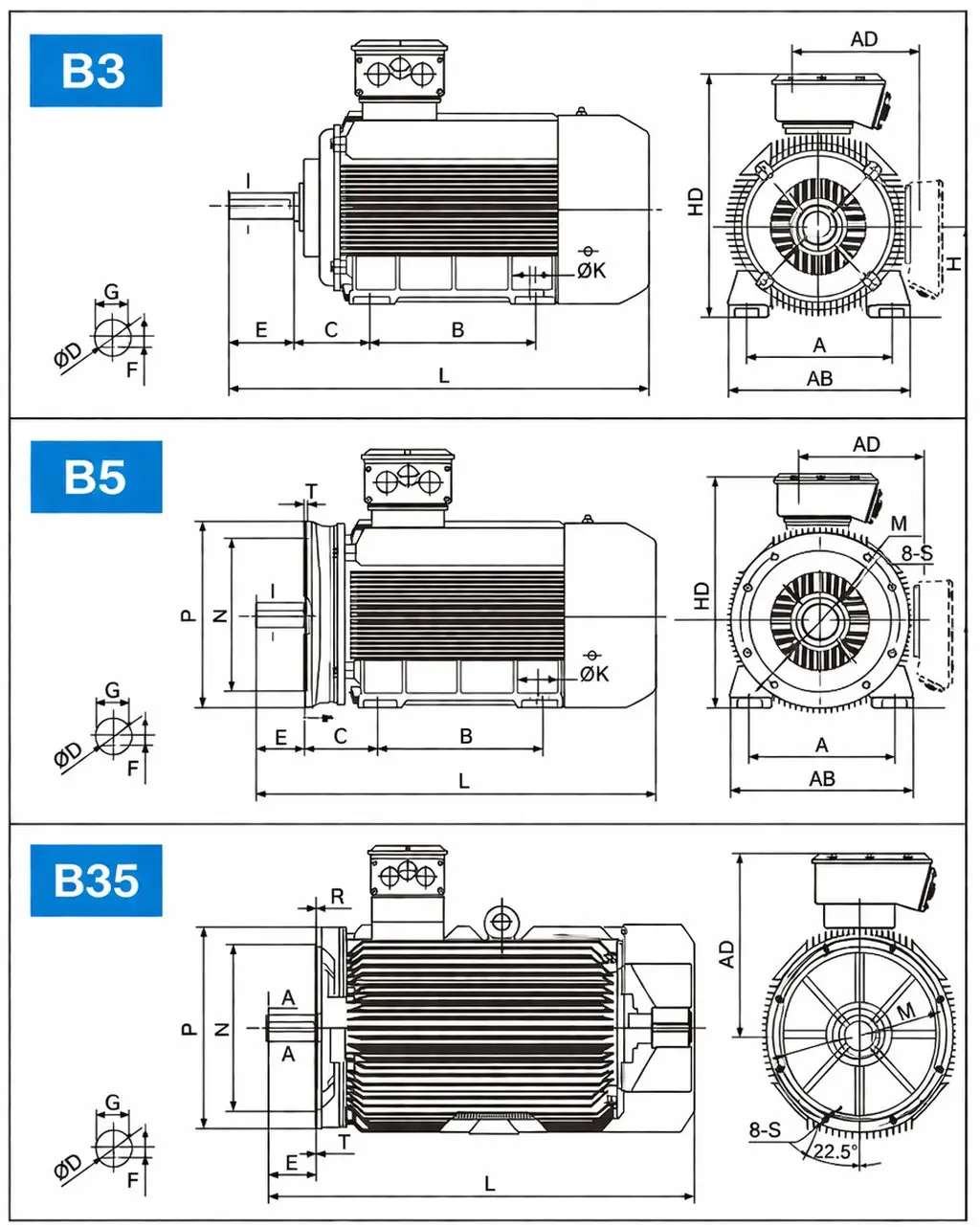
On most ratings, yes — the external dimensions and mounting patterns are identical. The efficiency gains come from internal material improvements (better steel, more copper, tighter tolerances) rather than from enlarging the frame. A few models at the boundary of a frame-size step — typically where the additional copper fill pushes winding temperature to the limit of the existing frame — move up one frame. Check our model-by-model dimensional table or send us your target rating and we will confirm the exact frame assignment.
We already run IE3 motors. Is the IE3→IE4 upgrade still worth it?
It depends on operating hours. On a 22 kW motor running 6 500 hours per year, the annual saving from IE3 to IE4 is approximately 2 200 kWh — around 250 000 KRW. The YE4 price premium over IE3 is typically 150 000 to 300 000 KRW depending on the frame size, so payback ranges from 7 to 14 months. If the motor runs fewer than 3 000 hours per year, the payback stretches beyond 2 years and IE3 may be the more practical choice. Our engineering team runs customized ROI calculations — send your motor list with power ratings and estimated annual hours.
Can we use the YE4 in a hazardous (Ex-rated) area?
The standard YE4 is not explosion-proof. For classified hazardous zones, use the YBX4 (IE4 efficiency with Ex d IIB T4 certification) or the YBBP (VFD-compatible explosion-proof motor with IC416 independent cooling). Both are available from the same production facility with the same delivery timelines.
What grease do the bearings use, and when should I re-lubricate?
Standard bearings are pre-lubricated with Shell Gadus S2 V100 3 or equivalent polyurea-thickened grease. Re-lubrication interval depends on speed and frame size — typically 8 000 to 15 000 hours for 4-pole motors under normal ambient conditions. The motor nameplate or maintenance manual specifies the exact interval and grease quantity for each model. Using the wrong grease type causes chemical incompatibility and accelerated bearing wear — always match the base oil and thickener type.
Can the YE4 handle frequent start-stop duty?
DOL starting on a contactor generates high inrush current (typically 6 to 8 times rated) and thermal stress in the winding. The YE4 is rated for S1 continuous duty, not S4 or S5 intermittent duty. If your application requires more than 10 starts per hour, use a soft starter or VFD to limit inrush current and thermal cycling. Alternatively, consider the YEJA electromagnetic brake motor for applications that require rapid, repeatable stopping between cycles.
Do you stock YE4 motors in Korea for immediate delivery?
We maintain buffer stock of the most popular frame sizes (7.5 kW through 45 kW, 4-pole, 380 V) at our Korean warehouse. These ship within 3 to 5 working days. Less common ratings and 2-pole configurations are made to order with a 10 to 18 day lead time. Contact our sales team for current stock availability.
💬 Customer Experiences
"We replaced 16 pump motors with YE4 units as part of our 2024 energy-reduction roadmap. The measured current drop was consistent with the catalog data — within 2 % on every unit. Our electricity consumption for the pumping station fell by 6 % in the first quarter, and the energy auditor accepted the factory test reports without requesting additional M&V. The motors arrived with full CE documentation, which simplified our import paperwork."
Kim Jae-hyun, Energy Manager
Water utility, Gyeonggi-do (Q1 2025)
"Building management company. We upgraded 8 AHU motors in a 30-story commercial tower from IE1 to YE4. The motors run 12 to 15 degrees cooler than the old units — bearing temperatures stabilized at 58 °C versus 73 °C. Tenants have not noticed any difference in air conditioning performance, but our energy bill dropped by 4.2 % on the HVAC sub-meter. The G-SEED auditor recorded the upgrade as verified savings."
Park Eun-jung, Facility Director
Commercial property management, Seoul (Q3 2024)
"Chemical plant, continuous process. The YE4-250M-4 has been running a reactor coolant pump for 11 months at about 80 % load. Bearing temperature is flat at 62 °C, vibration readings are within 0.5 mm/s of the commissioning baseline. The efficiency at 75 % load is actually 0.3 % better than the catalog figure — we verified on our calibrated dynamometer. We have now ordered 6 more for the next scheduled turnaround."
Shin Dong-wook, Rotating Equipment Engineer
Petrochemical plant, Ulsan (Q4 2024)
"We compared four brands for a 15-motor fleet order. The YE4 specification matched the two European options on every published parameter. The price was 35 % lower, delivery was 12 days instead of 8 weeks, and the technical sales engineer responded to our dimensional questions the same day we asked. Six months in service, zero issues, zero warranty claims. We have switched our approved vendor list."
Ahn Soo-mi, Procurement Manager
General manufacturing, Busan (Q1 2025)
"Swapped a 15 kW fan motor on our paint-booth exhaust system. The old IE1 motor drew 29 A at the same airflow point where the YE4 draws 26.3 A. That is a real, instrument-verified difference — not a catalog claim. Installation was a straight bolt-in swap, 45 minutes including laser alignment. The purchasing department approved the next 4 replacements based on that single test."
Jeon Tae-ho, Maintenance Engineer
Automotive parts manufacturer, Daegu (Q2 2025)
📦 Packing and Shipping

Additional information
| Editor | Cxm |
|---|
Related products
-
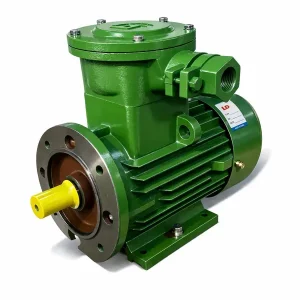
YBX3 Series Explosion Proof Three Phase Asynchronous Motor
-
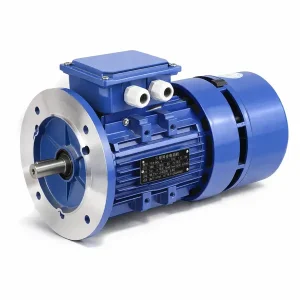
YEJA Series AC Electromagnetic Brake Three Phase Motor
-

YBBP Explosion Proof Variable Frequency Three Phase AC Gear Motor
-
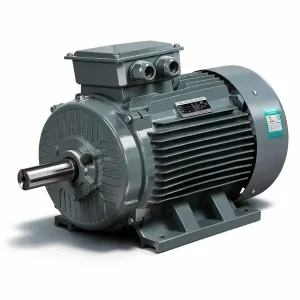
YE3/IE3 Premium Efficiency AC Gear Motor | Three Phase Motor
-

YBX4 Explosion Proof AC Gear Motor | IE4 Three Phase Motor
-
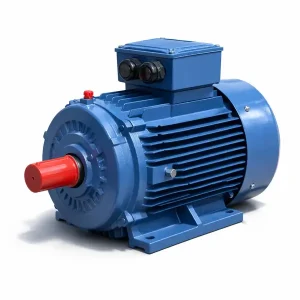
YE2 IE2 High Efficiency AC Gear Motor | Three Phase Induction Motor
-
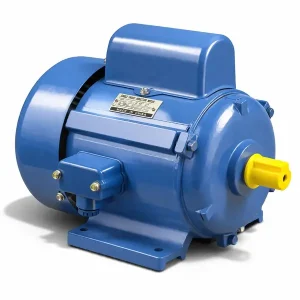
JY Single Phase AC Gear Motor | Capacitor Start Induction Motor
-
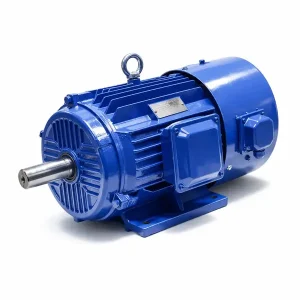
YVF2 AC Gear Motor – Variable Frequency Three Phase | Speed Control