Product Description
Company Introduction
DAJI GROUP. ZHangZhouG CHINAMFG ELECTRIC MOTOR Co., Ltd, is professional enaged in electric motor manufacturing for 30 years since 1988. The headquarters is located in ZheJiang city, group with 4 manufacturing bases in zHangZhoug and ZheJiang , has more than 300 national sales centers and special agencies, and exported to more than 50 countries and regions.
Factory Advantages
1. 30 years history
2. Competitive price
3. Guaranteed quality
4. Fast delivery time: normal models about 15-20 days , unusual models about 30 days
5. 100% testing after every process, 100% raw materials are selective
6. High efficiency
7. Low noise
8. Long life
9. Power saving
10. Slight vibration
11. It is newly designed in conformity with the relevant rules of IEC standards
12. Professional Service
13. Warranty: 12 months from date of delivery
14. Main Market: South America, Europe, Middle East, Southest Asia, Africa and so on
15. We have certificates for CE, CCC, ISO9001, SGS and so on
Product Introduction
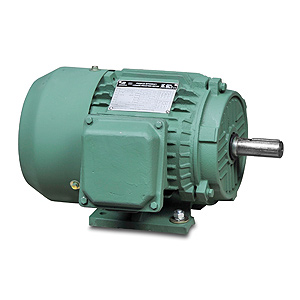
The series of YE3 motor is the ultra-high efficiency motor, developed to meet the requirements of the national energy conservation and emission reduction. It has the advantages of high efficiency, low noise, good starting performance and so on.
It’s widely used in occasions without special requirements, and it can also be used as power supporting machinery and equipment, such as compressor, water pump, fan and other fields and industries.
| YE3 Series Ultra-High Efficiency Three-Phase Asynchronous Motor | |
| 1). Frame: | 80 – 355 mm |
| 2). Power: | 0.55 – 375 kW |
| 3). Voltage: | 380 V |
| 4). Frequency: | 50 Hz |
| 5). Shell: | cast iron body, aluminum body |
| 6). Pole: | 2, 4, 6 |
| 7). Protection degree: | IP55 |
| 8). Insulation class: | F |
| 9). Cooling method: | IC411 |
| 10). Duty Type: | S1 |
| 11).Certificates: | CE, CCC, ISO9001, SGS and so on |
Working Condition: ambient temperature is -15oC to 40oC, and below 1000 CHINAMFG above sea level
FAQ:
Q: What is your delivery time?
A: Within 20-25 days after receiving deposit.
Q: Do you offer OEM service?
A: Yes. We accept OEM service.
Q: What is your MOQ of this item ?
A: 10 PCS per item.
Q: Can we type our brand on it?
A: Yes, of course.
Q: Where is your loading port ?
A: HangZhou Port, ZheJiang Port, China.
Q: What is your production capacity?
A: About 1000 PCS per day.
Ordering Instructions
1. Please indicate the fram size, power, synchronous speed, voltage, frequency, install measurements, inlet cable entrance type and direction of rotation etc.
2. If have special request, such as the voltage, frequency, protection degree, duplex shaft, direction of rotation, temperature monitoring device, install measurements, bearing oil discharge device and so on, please indicate in details in the ordering contract and CHINAMFG technical agreement if necessary.
3. When ordering other series of motor and derived motor in the sample, please follow this instruction without further notice, thank you for your cooperation!
| Application: | Industrial |
|---|---|
| Operating Speed: | Low Speed |
| Number of Stator: | Three-Phase |
| Species: | Y, Y2 Series Three-Phase |
| Rotor Structure: | Squirrel-Cage |
| Casing Protection: | Closed Type |
| Customization: |
Available
|
|
|---|
How do variable frequency drives (VFDs) impact the performance of AC motors?
Variable frequency drives (VFDs) have a significant impact on the performance of AC motors. A VFD, also known as a variable speed drive or adjustable frequency drive, is an electronic device that controls the speed and torque of an AC motor by varying the frequency and voltage of the power supplied to the motor. Let’s explore how VFDs impact AC motor performance:
- Speed Control: One of the primary benefits of using VFDs is the ability to control the speed of AC motors. By adjusting the frequency and voltage supplied to the motor, VFDs enable precise speed control over a wide range. This speed control capability allows for more efficient operation of the motor, as it can be operated at the optimal speed for the specific application. It also enables variable speed operation, where the motor speed can be adjusted based on the load requirements, resulting in energy savings and enhanced process control.
- Energy Efficiency: VFDs contribute to improved energy efficiency of AC motors. By controlling the motor speed based on the load demand, VFDs eliminate the energy wastage that occurs when motors run at full speed even when the load is light. The ability to match the motor speed to the required load reduces energy consumption and results in significant energy savings. In applications where the load varies widely, such as HVAC systems, pumps, and fans, VFDs can provide substantial energy efficiency improvements.
- Soft Start and Stop: VFDs offer soft start and stop capabilities for AC motors. Instead of abruptly starting or stopping the motor, which can cause mechanical stress and electrical disturbances, VFDs gradually ramp up or down the motor speed. This soft start and stop feature reduces mechanical wear and tear, extends the motor’s lifespan, and minimizes voltage dips or spikes in the electrical system. It also eliminates the need for additional mechanical devices, such as motor starters or brakes, improving overall system reliability and performance.
- Precision Control and Process Optimization: VFDs enable precise control over AC motor performance, allowing for optimized process control in various applications. The ability to adjust motor speed and torque with high accuracy enables fine-tuning of system parameters, such as flow rates, pressure, or temperature. This precision control enhances overall system performance, improves product quality, and can result in energy savings by eliminating inefficiencies or overcompensation.
- Motor Protection and Diagnostic Capabilities: VFDs provide advanced motor protection features and diagnostic capabilities. They can monitor motor operating conditions, such as temperature, current, and voltage, and detect abnormalities or faults in real-time. VFDs can then respond by adjusting motor parameters, issuing alerts, or triggering shutdowns to protect the motor from damage. These protection and diagnostic features help prevent motor failures, reduce downtime, and enable predictive maintenance, resulting in improved motor reliability and performance.
- Harmonics and Power Quality: VFDs can introduce harmonics into the electrical system due to the switching nature of their operation. Harmonics are undesirable voltage and current distortions that can impact power quality and cause issues in the electrical distribution network. However, modern VFDs often include built-in harmonic mitigation measures, such as line reactors or harmonic filters, to minimize harmonics and ensure compliance with power quality standards.
In summary, VFDs have a profound impact on the performance of AC motors. They enable speed control, enhance energy efficiency, provide soft start and stop capabilities, enable precision control and process optimization, offer motor protection and diagnostic features, and address power quality considerations. The use of VFDs in AC motor applications can lead to improved system performance, energy savings, increased reliability, and enhanced control over various industrial and commercial processes.
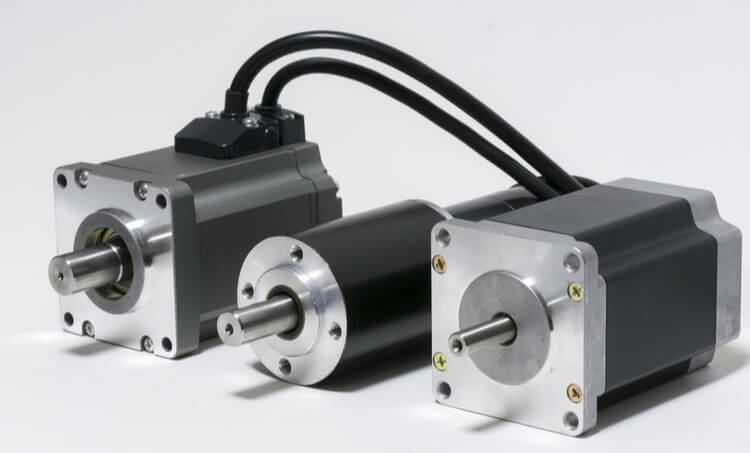
Can you explain the difference between single-phase and three-phase AC motors?
In the realm of AC motors, there are two primary types: single-phase and three-phase motors. These motors differ in their construction, operation, and applications. Let’s explore the differences between single-phase and three-phase AC motors:
- Number of Power Phases: The fundamental distinction between single-phase and three-phase motors lies in the number of power phases they require. Single-phase motors operate using a single alternating current (AC) power phase, while three-phase motors require three distinct AC power phases, typically referred to as phase A, phase B, and phase C.
- Power Supply: Single-phase motors are commonly connected to standard residential or commercial single-phase power supplies. These power supplies deliver a voltage with a sinusoidal waveform, oscillating between positive and negative cycles. In contrast, three-phase motors require a dedicated three-phase power supply, typically found in industrial or commercial settings. Three-phase power supplies deliver three separate sinusoidal waveforms with a specific phase shift between them, resulting in a more balanced and efficient power delivery system.
- Starting Mechanism: Single-phase motors often rely on auxiliary components, such as capacitors or starting windings, to initiate rotation. These components help create a rotating magnetic field necessary for motor startup. Once the motor reaches a certain speed, these auxiliary components may be disconnected or deactivated. Three-phase motors, on the other hand, typically do not require additional starting mechanisms. The three-phase power supply inherently generates a rotating magnetic field, enabling self-starting capability.
- Power and Torque Output: Three-phase motors generally offer higher power and torque output compared to single-phase motors. The balanced nature of three-phase power supply allows for a more efficient distribution of power across the motor windings, resulting in increased performance capabilities. Three-phase motors are commonly used in applications requiring high power demands, such as industrial machinery, pumps, compressors, and heavy-duty equipment. Single-phase motors, with their lower power output, are often used in residential appliances, small commercial applications, and light-duty machinery.
- Efficiency and Smoothness of Operation: Three-phase motors typically exhibit higher efficiency and smoother operation than single-phase motors. The balanced three-phase power supply helps reduce electrical losses and provides a more constant and uniform torque output. This results in improved motor efficiency, reduced vibration, and smoother rotation. Single-phase motors, due to their unbalanced power supply, may experience more pronounced torque variations and slightly lower efficiency.
- Application Suitability: The choice between single-phase and three-phase motors depends on the specific application requirements. Single-phase motors are suitable for powering smaller appliances, such as fans, pumps, household appliances, and small tools. They are commonly used in residential settings where single-phase power is readily available. Three-phase motors are well-suited for industrial and commercial applications that demand higher power levels and continuous operation, including large machinery, conveyors, elevators, air conditioning systems, and industrial pumps.
It’s important to note that while single-phase and three-phase motors have distinct characteristics, there are also hybrid motor designs, such as dual-voltage motors or capacitor-start induction-run (CSIR) motors, which aim to bridge the gap between the two types and offer flexibility in certain applications.
When selecting an AC motor, it is crucial to consider the specific power requirements, available power supply, and intended application to determine whether a single-phase or three-phase motor is most suitable for the task at hand.
What are the main components of an AC motor, and how do they contribute to its operation?
An AC motor consists of several key components that work together to facilitate its operation. These components include:
- Stator: The stator is the stationary part of an AC motor. It is typically made of a laminated core that provides a path for the magnetic flux. The stator contains stator windings, which are coils of wire wound around the stator core. The stator windings are connected to an AC power source and produce a rotating magnetic field when energized. The rotating magnetic field is a crucial element in generating the torque required for the motor’s operation.
- Rotor: The rotor is the rotating part of an AC motor. It is located inside the stator and is connected to a shaft. The rotor can have different designs depending on the type of AC motor. In an induction motor, the rotor does not have electrical connections. Instead, it contains conductive bars or coils that are short-circuited. The rotating magnetic field of the stator induces currents in the short-circuited rotor conductors, creating a magnetic field that interacts with the stator field and generates torque, causing the rotor to rotate. In a synchronous motor, the rotor contains electromagnets that are magnetized by direct current, allowing the rotor to lock onto the rotating magnetic field of the stator and rotate at the same speed.
- Bearing: Bearings are used to support and facilitate the smooth rotation of the rotor shaft. They reduce friction and allow the rotor to rotate freely within the motor. Bearings are typically located at both ends of the motor shaft and are designed to withstand the axial and radial forces generated during operation.
- End Bells: The end bells, also known as end covers or end brackets, enclose the motor’s stator and rotor assembly. They provide mechanical support and protection for the internal components of the motor. End bells are typically made of metal and are designed to provide a housing for the bearings and secure the motor to its mounting structure.
- Fan or Cooling System: AC motors often generate heat during operation. To prevent overheating and ensure proper functioning, AC motors are equipped with fans or cooling systems. These help dissipate heat by circulating air or directing airflow over the motor’s components, including the stator and rotor windings. Effective cooling is crucial for maintaining the motor’s efficiency and extending its lifespan.
- Terminal Box or Connection Box: The terminal box is a housing located on the outside of the motor that provides access to the motor’s electrical connections. It contains terminals or connection points where external wires can be connected to supply power to the motor. The terminal box ensures a safe and secure connection of the motor to the electrical system.
- Additional Components: Depending on the specific design and application, AC motors may include additional components such as capacitors, centrifugal switches, brushes (in certain types of AC motors), and other control devices. These components are used for various purposes, such as improving motor performance, providing starting assistance, or enabling specific control features.
Each of these components plays a crucial role in the operation of an AC motor. The stator and rotor are the primary components responsible for generating the rotating magnetic field and converting electrical energy into mechanical motion. The bearings ensure smooth rotation of the rotor shaft, while the end bells provide structural support and protection. The fan or cooling system helps maintain optimal operating temperatures, and the terminal box allows for proper electrical connections. Additional components are incorporated as necessary to enhance motor performance and enable specific functionalities.


editor by CX 2023-11-30