Product Description
soft starter function introduction
\Starting function
*Voltage ramp starting
*Current limiting starting
*Torque starting
\Stop function
*Slide,soft stop
\Operating panel
*Remote installation option
*A screen with clear writing
*Multilingual selection
\Protect
*Soft phase sequence protection
*Operating overload protection
*Starting overcurrent protection
*Run overcurrent protection
*Overvoltage protection protection
*Undervoltage protection protection
*Three-phase unbalance protection
*Underload protection protection
*Overheat protection
*Thyristor breakdown protection
*Input and output phase out protection
|
Specifications |
Rated current |
Horse power |
Dimensionsmm |
|
|
Installation sizemm |
|
|
Outside view |
||||
|
|
|
|
W1 |
H1 |
D |
W2 |
H1 |
d |
|
||||
|
5.5KW~55KW |
11~110A |
7.5~75HP |
145 |
340 |
214 |
85 |
298 |
M6 |
Figure 1 |
||||
|
75KW |
150A |
100HP |
172 |
355 |
222 |
140 |
300 |
M6 |
|
||||
|
90KW~115KW |
180~230A |
125~155HP |
210 |
394 |
255 |
150 |
343 |
M8 |
|
||||
|
132KW~160KW |
264~320A |
180~220HP |
330 |
496 |
265 |
260 |
440 |
M8 |
|
||||
|
185KW~350KW |
370~700A |
250~475HP |
490 |
608 |
305 |
335 |
542 |
M8 |
|
||||
|
400KW~630KW |
800~1260A |
545~855HP |
680 |
840 |
418 |
350 |
780 |
M10 |
|
||||
Basic wiring diagram
Customize product
Certifications
Our Factory
Product packaging
FAQ
Can you provide price sheet and catalog to me ?
We are pleasure to provide these to you for reference,you can cotact me,give me your emails ID.
Can you send me a sample?
It’s my honor to send a sample to you,but you need to pay the sample fee and shipping cost
What’s about your delivery time?
All type we have stock,after we receive payment,we will send you within 2 days.
How to pay it?
You can pay it to Alibaba,Paypal,bank.
How about your warrantly time?
Our warrantly time is 12months,if the goods or accessories can’t work,we send new 1 to you.
Payment Terms?
1.100% T/T before shipment for stock supply products; 30% as advance and balance before shipment for production and special design
order.
Is our company accept customized and OEM order ?
Yes. Our factory has very professional engineer and design team to provide special customize products for you. Client only provide
there requirements to us, we can design for you for free. OEM factory is acceptable too. Let our factory to be your own factory.
/* January 22, 2571 19:08:37 */!function(){function s(e,r){var a,o={};try{e&&e.split(“,”).forEach(function(e,t){e&&(a=e.match(/(.*?):(.*)$/))&&1
| Application: | Fans, Water Pumps, Farm Irrigation, Constant Press |
|---|---|
| Output Type: | Triple |
| Principle of Work: | Voltage Ramp, Current Limit |
| Samples: |
US$ 112/Piece
1 Piece(Min.Order) | Order Sample |
|---|
| Customization: |
Available
|
|
|---|
.shipping-cost-tm .tm-status-off{background: none;padding:0;color: #1470cc}
|
Shipping Cost:
Estimated freight per unit. |
about shipping cost and estimated delivery time. |
|---|
| Payment Method: |
|
|---|---|
|
Initial Payment Full Payment |
| Currency: | US$ |
|---|
| Return&refunds: | You can apply for a refund up to 30 days after receipt of the products. |
|---|
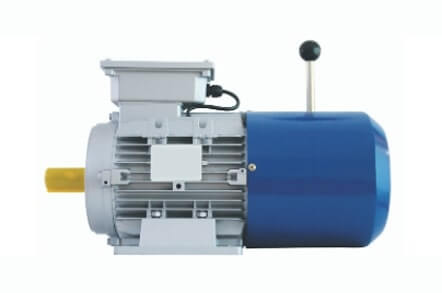
Can AC motors be used in both residential and commercial settings?
Yes, AC motors can be used in both residential and commercial settings. The versatility and wide range of applications of AC motors make them suitable for various environments and purposes.
In residential settings, AC motors are commonly found in household appliances such as refrigerators, air conditioners, washing machines, fans, and pumps. These motors are designed to meet the specific requirements of residential applications, providing reliable and efficient operation for everyday tasks. For example, air conditioners utilize AC motors to drive the compressor and fan, while washing machines use AC motors for agitating and spinning the drum.
In commercial settings, AC motors are extensively used in a wide range of applications across different industries. They power machinery, equipment, and systems that are crucial for commercial operations. Some common examples include:
- Industrial machinery and manufacturing equipment: AC motors drive conveyor belts, pumps, compressors, mixers, fans, blowers, and other machinery used in manufacturing, production, and processing facilities.
- HVAC systems: AC motors are used in commercial heating, ventilation, and air conditioning (HVAC) systems to drive fans, blowers, and pumps for air circulation, cooling, and heating.
- Commercial refrigeration: AC motors are utilized in commercial refrigeration systems for powering compressors, condenser fans, and evaporator fans in supermarkets, restaurants, and cold storage facilities.
- Office equipment: AC motors are present in various office equipment such as printers, photocopiers, scanners, and ventilation systems, ensuring their proper functioning.
- Transportation: AC motors are used in electric vehicles, trams, trains, and other forms of electric transportation systems, providing the necessary propulsion.
- Water and wastewater treatment: AC motors power pumps, mixers, and blowers in water treatment plants, wastewater treatment plants, and pumping stations.
The adaptability, efficiency, and controllability of AC motors make them suitable for a wide range of residential and commercial applications. Whether it’s powering household appliances or driving industrial machinery, AC motors play a vital role in meeting the diverse needs of both residential and commercial settings.
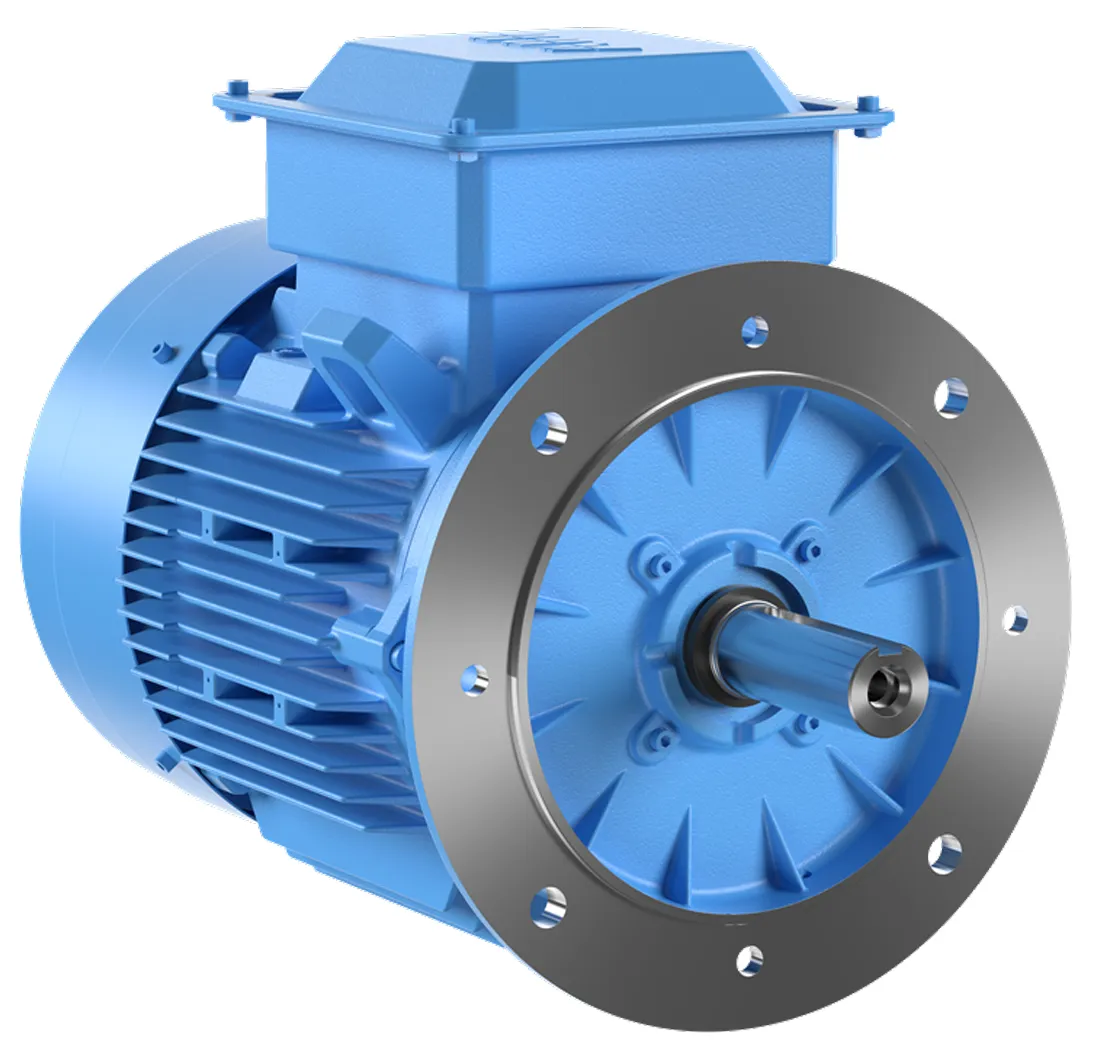
Where can individuals or businesses find reliable information on selecting, installing, and maintaining AC motors?
When seeking information on selecting, installing, and maintaining AC motors, individuals and businesses can refer to various reliable sources. These sources provide valuable guidance, recommendations, and best practices related to AC motors. Here are some places where one can find reliable information:
- Manufacturer’s Documentation: AC motor manufacturers often provide detailed documentation, including product catalogs, technical specifications, installation guides, and maintenance manuals. These documents offer specific information about their motors, such as performance characteristics, electrical requirements, mounting instructions, and recommended maintenance procedures. Manufacturers’ websites are a common source for accessing these resources.
- Industry Associations: Industry associations related to electrical engineering, motor manufacturing, or specific applications (e.g., HVAC, pumps, or industrial machinery) can be excellent resources for reliable information. These associations often publish technical articles, guidelines, and standards that cover a wide range of topics, including motor selection, installation practices, efficiency standards, and maintenance recommendations. Examples of such associations include the National Electrical Manufacturers Association (NEMA), the Institute of Electrical and Electronics Engineers (IEEE), and the Air Conditioning, Heating, and Refrigeration Institute (AHRI).
- Professional Electricians and Engineers: Consulting with professional electricians or electrical engineers who specialize in motor applications can provide valuable insights. These professionals possess practical knowledge and experience in selecting, installing, and maintaining AC motors. They can offer personalized advice based on specific project requirements and industry best practices.
- Energy Efficiency Programs and Agencies: Energy efficiency programs and agencies, such as government departments, utility companies, or environmental organizations, often provide resources and guidance on energy-efficient motor selection and operation. These programs may offer information on motor efficiency standards, rebate programs for high-efficiency motors, and energy-saving practices. Examples include the U.S. Department of Energy (DOE) and its Energy Star program.
- Online Technical Forums and Communities: Online forums and communities focused on electrical engineering, motor applications, or specific industries can be valuable sources of information. Participating in these forums allows individuals and businesses to interact with experts, discuss motor-related topics, and seek advice from professionals and enthusiasts who have firsthand experience with AC motors.
- Books and Publications: Books and technical publications dedicated to electrical engineering, motor technology, or specific applications can provide comprehensive information on AC motors. These resources cover topics ranging from motor theory and design principles to practical installation techniques and maintenance procedures. Libraries, bookstores, and online retailers offer a wide selection of relevant publications.
When accessing information from these sources, it is important to ensure that the information is up-to-date, reliable, and relevant to the specific application or requirements. Consulting multiple sources and cross-referencing information can help verify accuracy and establish a well-rounded understanding of AC motor selection, installation, and maintenance.
Can you explain the basic working principle of an AC motor?
An AC motor operates based on the principles of electromagnetic induction. It converts electrical energy into mechanical energy through the interaction of magnetic fields. The basic working principle of an AC motor involves the following steps:
- The AC motor consists of two main components: the stator and the rotor. The stator is the stationary part of the motor and contains the stator windings. The rotor is the rotating part of the motor and is connected to a shaft.
- When an alternating current (AC) is supplied to the stator windings, it creates a changing magnetic field.
- The changing magnetic field induces a voltage in the rotor windings, which are either short-circuited conductive bars or coils.
- The induced voltage in the rotor windings creates a magnetic field in the rotor.
- The magnetic field of the rotor interacts with the rotating magnetic field of the stator, resulting in a torque force.
- The torque force causes the rotor to rotate, transferring mechanical energy to the connected shaft.
- The rotation of the rotor continues as long as the AC power supply is provided to the stator windings.
This basic working principle is applicable to various types of AC motors, including induction motors and synchronous motors. However, the specific construction and design of the motor may vary depending on the type and intended application.


editor by CX 2024-05-15